
How to Properly Apply and Maintain Custom Power Tool Battery Stickers
Although custom power tool battery stickers are an amazing way to identify your instruments, deter theft, and advertise your company, they must be applied and maintained properly to get the most out of them. Dirt, grease, and wear can cause a badly applied sticker to fade, peel off fast, or become unreadable. Your stickers will last longer and continue to appear professional if you take care of them properly.
To make sure your stickers last a long time, we’ll go over proper application methods, upkeep advice, and best practices in this article.
Why Proper Application Matters?
Power tool battery stickers are essential for safety, security, and branding. The harsh job site circumstances that these stickers are subjected to regularly may affect their effectiveness and longevity. Over time, maintaining their adherence, visibility, and protective properties requires careful application.
Challenges in Harsh Work Environments
Power tool battery stickers’ resilience rests on their capacity to withstand various environmental factors that degrade performance quality. Power tool battery stickers have the following main challenges:
1. Constant Handling and Friction
Due to regular tool handling activities and storage in toolboxes, power tools encounter increased chances of sticker deterioration which includes peeling and wear-out. Repetitive tool usage will produce friction that leads to sticker edge lifting thus increasing their vulnerability to dirt damage.
2. Exposure to Dirt, Dust, Grease, and Moisture
The environment at construction sites and industrial facilities as well as workshops subjects power tool batteries to multiple damaging exposures of dust moisture and grease. The proper attachment of stickers prevents weather elements from seeping underneath which results in reduced adhesion strength that eventually leads to sticker detachment. Laboratory tests confirm that the accumulation of dirt causes product branding to become unreadable during multi-year use periods.
3. Temperature Fluctuations and UV Rays
ibrials sustaining high or low temperatures at work sites and when using high-powered tools lead to decreased sticker maintenance. Both heat-based adhesive softening and cold temperature brittleness damage stickers by causing detachment and cracking respectively. The continuous exposure to UV rays causes the printed information to fade away and become less visible.
4. Chemical Exposure from Cleaning Products
Industrial solvents and degreasers need regular use to perform cleaning operations on numerous equipment parts. Stickers deteriorate because of cleaning agents when they use non-chemical-resistant materials or have improper application methods. Acute and chronic exposure to environmental conditions causes systematic degradation that leads to erasure of branding or labels or almost complete sticker detachment.
Consequences of Improper Application
Battery stickers may not stick to the surface adequately if they are not applied appropriately, which could result in several issues:
- Peeling and Bubbling: Inadequately applied stickers may lift at the edges or create air pockets, which lessens their ability to keep out moisture, dust, and oils.
- Wear and Fading: Poor adherence causes stickers to prematurely deteriorate, making it challenging to read information labels and branding.
- Lack of Security Features: Stickers are frequently used for tracking, warranty information, and ownership identification. Tools may become more difficult to recognize or verify if they wear out or become illegible.
Step-by-Step Guide to Applying Custom Power Tool Battery Stickers
Putting battery stickers on tools correctly defends them from damage by preserving their readability and maintaining their water resistance despite contact with oil and grease. The stickers serve multiple benefits by shielding the surface and identifying your tools plus they help track tool ownership and company details. The battery stickers work best when users follow the right application methods.
These instructions show you the best way to position your adhesives to make them work perfectly for extended periods.
Step 1: Clean the Surface Thoroughly
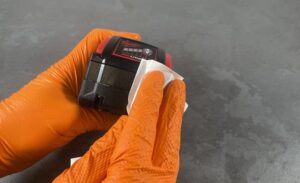
You need to clean your target area before placing the sticker on top. Dirt and other particles on the battery block will keep stickers from bonding properly as they lift from the surface early.
How to Clean the Surface Properly
- Use Isopropyl Alcohol or Degreasing Wipes:
To get rid of grease and other filth, the ideal cleaning solution for materials that attach to surfaces must contain at least 70% isopropyl alcohol. Using a degreasing wipe or a solution of warm water and mild detergent can effectively clean and prepare your surface. - Ensure the Surface is Smooth and Free of Damage:
Stickers show superior attachment to flat uniform surfaces. No label stick will form properly when applied to battery bodies with damaged paint, texturing, and breakage. When the surface looks damaged you should soften rough spots through sanding followed by fresh cleaning.
Step 2: Position the Sticker Correctly
Consider the best location for the sticker for a moment before removing the backing. In addition to making the sticker more likely to peel, misalignment or improper placement can compromise branding and visibility.
Key Tips for Proper Alignment
- Check the Placement Before Sticking:
Without taking off the backing, keep the sticker firmly in place on the battery pack. This enables you to see how it will appear after application and make any necessary modifications. - Avoid Uneven or Curved Surfaces:
Rather than highly curved or textured regions of the battery pack, stickers stick best to flat areas. To improve adhesion, move the sticker to a smoother surface if needed.
Step 3: Apply the Sticker Firmly and Smoothly
Place the sticker in its right position before pressing it onto the surface to make it stay put.
Best Practices for Application
- Peel Off the Backing Carefully:
Expose one end of the sticker’s backing and handle it carefully to avoid touching the adhesive. When you put your hands on the adhesive surface you may transfer skin oil which weakens attachment. - Apply the Sticker from One Side to the Other:
Uncover one side of the sticker first then gently transfer it over the surface area to ward off air pockets. Pressing the entire sticker unit at once will create air pockets under the sticker sheet. - Apply Firm Pressure:
Press evenly over the whole sticker surface to create a secure bond. Devote special care to the sticker edges because they tend to detach first.
Step 4: Allow the Adhesive to Cure Properly
The battery surface requires enough time to develop strong permanent connections with the sticker adhesive. A sticker cannot stay stuck properly on a battery if you skip this time needed for adhesive bonding.
Curing Guidelines for Maximum Adhesion
- Let the Sticker Sit for At Least 24 Hours:
Leave the tool unused for 24 hours after placing the sticker to ensure complete bonding happens. The waiting period lets the adhesive connect strongly to the battery surface. - Steer clear of harsh environments:
Keep your tool away from damp air and extremes of temperature to ensure optimal curing conditions. Fast temperature swings make the adhesive lose its strength and break away from the surface sooner than expected.
Maintaining Your Power Tool Battery Stickers
For branding, marking, and protecting batteries from the weather, power tool battery stickers are essential. Here are some crucial pointers for keeping your power tool battery stickers in good condition.
Regular Cleaning to Prolong Lifespan
One of the easiest ways to keep your battery stickers clean is by cleaning them regularly. Thus, the following tips should be followed to counter this:
- Microfiber cloth use: Take a clean microfiber cloth and simply wipe it down to remove any loose dust and debris. The sticker will not be damaged.
- Avoid harsh chemicals: Cleaning agents like acetone, alcohol, and other industrial solvents have been known to destroy the adhesive backing of the stickers and cause the text to fade.
- Light soap and water for deep cleaning: For extremely dirty stickers, use a light soap and water solution, but dry completely so you don’t ruin the sticker.
Your stickers maintain their professional appearance in addition to being firmly affixed to the save so that you can easily use the battery. Regular cleaning for rechargeable batteries is necessary for upkeep
Keeping Stickers Safe from Adversities
The outer environment in which power tools are used can greatly impact the longevity of battery stickers. Faint, high heat, and water can result in early damage. Take the following precautions to make your stickers last:
- Use UV-Proof Stickers in Extreme Heat: In very hot weather or sunlight, faint-resistant stickers are essential so that your stickers don’t rust.
- Ensure Stickers Are Oil-And Waterproof: To stay stuck and readable, stickers must be oil-resistant and waterproof. This keeps them intact in wet or oily conditions.
- Avoid Abusive Surfaces: Uneven surfaces that can scrape stickers off should not be used. Try and avoid putting equipment on such surfaces.
By following these simple precautions, you can endure harsh working conditions and still sustain sticker usability while increasing their longevity.
Timely Replacement of Worn-Out Stickers
Even with great care, use, and environmental factors will eventually deteriorate your stickers. To ensure their effectiveness, examine them accordingly and take proactive measures as needed. Below are the indicators that there is a need for change:
- Loss of Adhesion: Stickers that are lifting may become less sticky over time.
- Loss of Color or Visible Text: Replace the sticker immediately after any useful information disappears for sticker maintenance and brand integrity.
- Scratches and Rips on the Surface: Worn-out or ripped stickers are less appealing and functional.
Common Mistakes to Avoid
When power tool battery stickers are maintained, some errors might cause an early breakdown or insufficient adherence. Don’t make these common mistakes to maximize your stickers’ usage:
- Ignoring the Cleaning Step: When the sticker is not routinely cleaned, the dirt, grease, and dirt accumulate and destabilize the adhesive, which in turn makes the sticker peel prematurely.
- Applying Stickers in Cold Weather: Adhesives can become less effective in cold temperatures, resulting in weak adhesion.
- Using Low-Quality Stickers: Initially, it may sound like a great idea to purchase cheap, lower-quality stickers, but they won’t last long and cannot bear the conditions of a construction site. Use high-quality, weatherproof materials to perform optimally in the long term.
Conclusion
Effective utilization of personalized power tool battery stickers improves tool durability, branding, and identification. It is a simple but critical process. You can achieve a firm, long-lasting bond that can endure rough work conditions by properly cleaning the surface, positioning the sticker, applying it, and allowing the adhesive to harden.
Not only does a properly applied sticker produce a professional-quality finish on your tools, but it also provides you with weather, water, and oil resistance, slowing down the time valuable information is legible. Taking the time to properly apply your stickers will keep you better organized, and loss prevention-minded, and optimize brand exposure, whether you are an industrial-scale operator, independent contractor, or workshop owner.
You can keep your power tool battery stickers in place, performing optimally, and resisting everyday wear and tear by following this step-by-step instruction.